The internet constantly creates new slang words that quickly become part of online conversations. Some terms disappear after a few weeks, while others become major cultural trends. One of the latest viral words gaining attention across TikTok, Instagram, and meme culture is “chubai.” Over the past year, this slang term has spread rapidly among Gen Z users, especially in discussions related to fashion, influencers, luxury lifestyles, and social media aesthetics.
The popularity of reflects a major shift in internet culture. Younger audiences are becoming more critical of fake luxury, attention-seeking behavior, and unrealistic influencer lifestyles. Instead of admiring flashy content, many social media users now prefer authenticity, simplicity, and originality. As a result, the word “chubai” has become a humorous but powerful way to describe things that feel overly dramatic, fake, or unnecessarily luxurious.
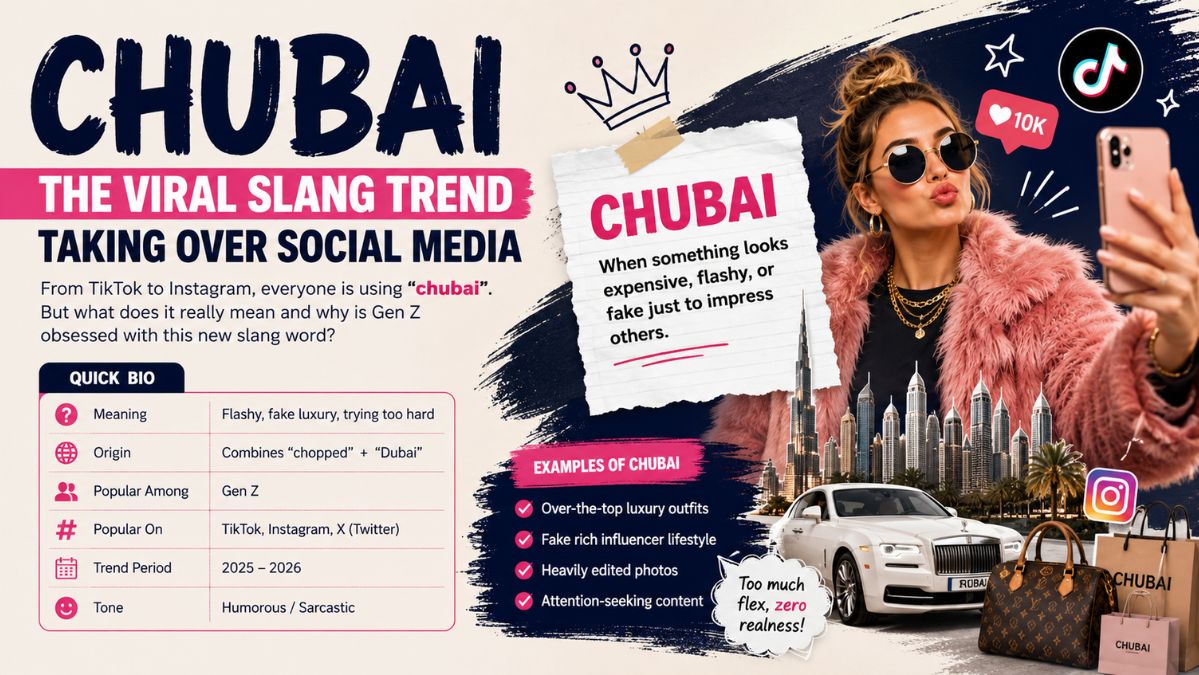
Quick Bio Table About “Chubai”
| Detail | Information |
|---|---|
| Keyword | Chubai |
| Type | Viral Internet Slang |
| Popular Platforms | TikTok, Instagram, X (Twitter) |
| Main Audience | Gen Z Users |
| Meaning | Flashy, fake luxury, tacky behavior |
| Related To | Social Media Culture |
| Viral Period | 2025–2026 |
| Common Usage | Fashion, influencer trends, memes |
| Tone | Humorous / Sarcastic |
| Trend Category | Internet & Pop Culture |
What Does ” Mean?
The word “chubai” is mainly used online to describe something that appears:
- overly flashy,
- fake-rich,
- excessively luxurious,
- or trying too hard to impress others.
In social media conversations, people use the term to criticize aesthetics or behavior that feel artificial or exaggerated. It often refers to influencer lifestyles that seem more focused on appearance than authenticity.
For example, users may describe:
- fake designer outfits,
- rented luxury cars for photos,
- heavily edited selfies,
- or unrealistic travel content as “chubai.”
The slang is usually not meant to be extremely offensive. Instead, it is often used humorously in memes and internet jokes.
The Possible Origin of the Word
Although there is no officially confirmed origin, many internet users believe the term combines:
- “Chopped” — internet slang meaning unattractive or bad,
- with “Dubai” — a city often associated online with luxury, wealth, and extravagant lifestyles.
By combining these ideas, the internet created “,” a word representing luxury that feels fake, excessive, or performative.
This creative style of slang creation is very common in Gen Z internet culture, where words evolve quickly through memes and viral videos.
Why “Chubai” Became Viral
There are several reasons why “” became so popular online.
1. Gen Z Prefers Authenticity
Modern internet audiences are becoming tired of unrealistic influencer lifestyles. Many people now prefer creators who appear genuine and relatable instead of overly perfect.
“Chubai” became a way for users to mock content that feels fake or overly staged.
2. TikTok’s Viral Nature
TikTok plays a massive role in spreading internet slang. Once creators started using the term in videos and comments, millions of users quickly adopted it.
The word became especially popular in:
- fashion reactions,
- influencer criticism videos,
- luxury lifestyle memes,
- and comedy content.
3. Meme Culture
Internet meme pages helped spread the word even faster. People began using “chubai” as a joke to describe:
- flashy restaurants,
- overdesigned outfits,
- or dramatic social media personalities.
The humor behind the word made it highly shareable online.
Chubai and Influencer Culture
One of the biggest reasons behind the popularity of “” is the changing perception of influencer culture.
In the past, social media users admired:
- luxury vacations,
- expensive fashion,
- luxury cars,
- and glamorous lifestyles.
Today, many users question whether these lifestyles are real or simply created for content. Some influencers have been exposed for:
- renting private jets for photos,
- borrowing luxury products,
- or staging fake luxury experiences.
As a result, “chubai” became a slang term associated with fake-rich culture and performative luxury.
Examples of Chubai Behavior
The term can apply to many different online trends and behaviors.
Over-Branded Fashion
Wearing giant designer logos everywhere simply to show off wealth is often described as “chubai.”
Fake Luxury Photoshoots
Posing in rented luxury locations or pretending to live an expensive lifestyle online can also be considered “chubai.”
Excessive Social Media Editing
Over-editing photos to appear unrealistically perfect is another example often criticized by internet users.
Attention-Seeking Content
People who constantly seek validation through expensive-looking content may receive “chubai” comments online.
Chubai vs Quiet Luxury
The rise of “chubai” also connects to the growing popularity of “quiet luxury.”
Quiet Luxury
Quiet luxury focuses on:
- minimalism,
- subtle elegance,
- timeless fashion,
- and understated wealth.
Chubai
Meanwhile, “chubai” represents:
- loud luxury,
- fake-rich aesthetics,
- excessive branding,
- and attention-seeking behavior.
This contrast highlights how online culture is changing. Many younger users now prefer personal style and authenticity over obvious displays of wealth.
The Psychological Side of the Trend
The popularity of “chubai” reveals deeper cultural changes happening online.
Social media once encouraged people to:
- appear perfect,
- display wealth,
- and create unrealistic lifestyles.
However, constant exposure to fake perfection has made audiences more skeptical. People now appreciate:
- honesty,
- natural content,
- and relatable creators.
The word “chubai” reflects frustration with social media culture that feels overly artificial or disconnected from reality.
How Brands Are Responding
Brands and influencers are already adapting to these changing trends.
Many companies now focus on:
- authentic storytelling,
- realistic marketing,
- behind-the-scenes content,
- and natural aesthetics.
Instead of promoting extreme luxury, brands increasingly highlight:
- comfort,
- simplicity,
- sustainability,
- and individuality.
This shift shows how internet slang can influence larger cultural and marketing trends.
The Role of Humor in Chubai Culture
One reason the word spread so quickly is because it is funny and flexible. Users can apply it to many situations online.
For example:
- Someone might intentionally dress in a flashy way and jokingly call themselves “chubai.”
- Friends may use the term playfully without serious criticism.
- Meme creators use the word to exaggerate luxury culture humorously.
This self-aware humor is a major part of modern Gen Z communication.
Will “Chubai” Stay Popular?
Internet slang changes quickly, so the exact word may eventually fade. However, the ideas behind it are likely to remain important.
The criticism of:
- fake luxury,
- influencer culture,
- and performative lifestyles
is becoming more common across social media platforms.
Even if a new slang term replaces “chubai,” the internet’s focus on authenticity will probably continue growing in the future.
Cultural Impact of Chubai
Although “chubai” started as internet slang, it now represents something larger:
- changing social media values,
- shifting fashion trends,
- and modern digital behavior.
The trend shows how younger audiences are becoming more socially aware and critical of online image culture.
It also demonstrates the power of internet communities to create entirely new cultural vocabulary within a short period.
Final Thoughts
“Chubai” is one of the newest examples of how internet culture constantly evolves through memes, humor, and social media discussions. The slang term became popular because it perfectly describes a growing frustration with fake luxury, exaggerated influencer lifestyles, and overly curated online aesthetics.
As TikTok and other platforms continue shaping digital communication, terms like “chubai” will continue influencing conversations about fashion, authenticity, and online identity. Whether used seriously or jokingly, the word has already become part of modern internet culture.
For more viral internet trends, social media insights, and digital culture articles, keep visiting infoloop for the latest updates and detailed guides.